What Is VO2 Max?
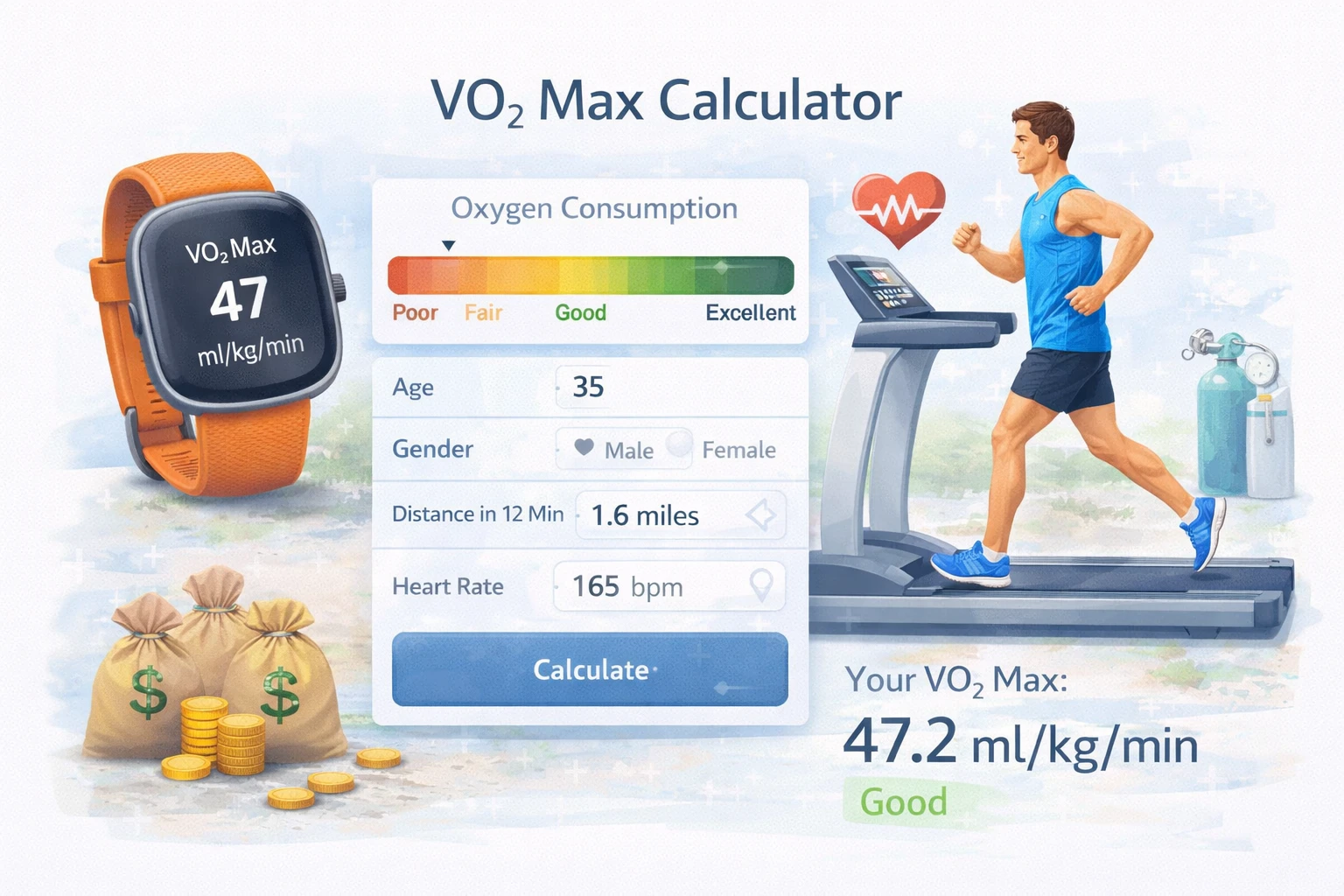
VO2 max is the maximum amount of oxygen your body can use during intense exercise. It's widely considered one of the best indicators of cardiovascular fitness and endurance performance. The measurement is expressed in milliliters of oxygen per kilogram of body weight per minute (ml/kg/min).
Higher VO2 max values generally mean better aerobic fitness and stamina. Your VO2 max reflects how efficiently your heart, lungs, and muscles work together to transport and utilize oxygen during physical activity. Elite endurance athletes typically have VO2 max values above 60-70 ml/kg/min, while average untrained individuals range from 30-40 ml/kg/min.
Understanding your VO2 max helps you track fitness improvements, set training goals, and assess cardiovascular health. Regular monitoring can show the effectiveness of your training program and motivate continued progress.
How to Calculate VO2 Max
There are several ways to estimate VO2 max without expensive laboratory equipment:
1. 1-Mile Run Test
Run one mile as fast as possible and enter your time, heart rate, and personal details. This is the most popular method because it's simple, requires minimal equipment, and provides accurate results. The formula accounts for your weight, age, gender, run time, and optionally your heart rate immediately after finishing.
With heart rate:
VO2max = 132.853 - (0.0769 × weight) - (0.3877 × age) + (6.315 × gender) - (3.2649 × time) - (0.1565 × HR)
2. Cooper Test
Measure how far you can run in 12 minutes. This test was developed by Dr. Kenneth Cooper in 1968 and remains widely used by military and athletic organizations. Simply run as far as possible in 12 minutes on a track or measured course, then use the distance to calculate your VO2 max.
3. Heart Rate Method
Use your resting and maximum heart rate for a quick estimate. This method is less accurate but requires no running test. It's useful for getting a baseline estimate or when physical testing isn't possible. The formula uses your age to estimate maximum heart rate (220 - age) and compares it to your resting heart rate.
What Is a Good VO2 Max?
VO2 max varies significantly by age and gender. Here are general ranges to help you understand where you stand:
Men (by age group)
| Age | Poor | Fair | Average | Good | Excellent |
|---|---|---|---|---|---|
| 20-29 | <39 | 39-43 | 43-47 | 47-51 | 51+ |
| 30-39 | <35 | 35-39 | 39-43 | 43-48 | 48+ |
| 40-49 | <32 | 32-36 | 36-40 | 40-44 | 44+ |
Women (by age group)
| Age | Poor | Fair | Average | Good | Excellent |
|---|---|---|---|---|---|
| 20-29 | <30 | 30-34 | 34-38 | 38-43 | 43+ |
| 30-39 | <27 | 27-31 | 31-35 | 35-40 | 40+ |
| 40-49 | <24 | 24-28 | 28-32 | 32-36 | 36+ |
Athletes typically have much higher VO2 max values than the general population. Elite marathon runners often exceed 70 ml/kg/min, while Tour de France cyclists can reach 80-90 ml/kg/min. However, even modest improvements in VO2 max can significantly enhance your health and quality of life.
How to Improve VO2 Max
You can increase your VO2 max with targeted training strategies:
🏃 High-Intensity Interval Training (HIIT)
Alternate between intense bursts of activity and recovery periods. Example: 4-minute hard runs followed by 3-minute recovery, repeated 4-6 times. HIIT is one of the most effective methods for improving VO2 max.
🚴 Long-Distance Endurance Training
Build aerobic base with longer, moderate-intensity sessions. Run, cycle, or swim for 45-90 minutes at a comfortable pace. This improves your cardiovascular system's efficiency.
💪 Consistent Aerobic Exercise
Train 4-5 times per week with varied intensities. Mix HIIT sessions with steady-state cardio and recovery runs. Consistency is key - regular training produces better results than sporadic intense workouts.
🥗 Proper Recovery and Nutrition
Allow adequate rest between hard sessions. Fuel your body with quality carbohydrates, proteins, and stay hydrated. Sleep 7-9 hours nightly to maximize training adaptations.
Even small improvements can significantly boost your fitness and performance. Studies show that beginners can improve VO2 max by 15-30% in just 3-6 months of consistent training. The key is progressive overload - gradually increasing training intensity and volume over time.
VO2 Max Calculation Formulas
Different methods to estimate your maximum oxygen uptake
- 1-Mile Run Test: VO2max = 132.853 - (0.0769 × weight) - (0.3877 × age) + (6.315 × gender) - (3.2649 × time) - (0.1565 × heart rate)
- Cooper Test: VO2max = (distance in meters - 504.9) / 44.73
- Heart Rate Method: VO2max = 15 × (HRmax / HRrest), where HRmax = 220 - age
Example Calculation
30-year-old male, 75kg, runs 1 mile in 9 minutes with 165 bpm heart rate
Frequently Asked Questions
Can I measure VO2 max without a lab?
Yes, estimation formulas like the 1-mile run test and Cooper test provide reliable results that correlate well with lab measurements. While not as precise as laboratory testing, these methods are accurate enough for tracking fitness progress and comparing to population norms.
Is smartwatch VO2 max accurate?
Smartwatch VO2 max estimates can vary in accuracy. Devices like Apple Watch, Garmin, and Fitbit use algorithms based on heart rate and activity data, but results may differ from lab tests by 10-20%. They're useful for tracking trends over time rather than absolute values.
What is an elite VO2 max?
Elite endurance athletes often have VO2 max values above 60-70 ml/kg/min. Professional cyclists and cross-country skiers can exceed 80-90 ml/kg/min. For reference, average untrained men have values around 35-40 ml/kg/min, and women around 27-30 ml/kg/min.
How quickly can I improve my VO2 max?
With consistent training, you can improve VO2 max by 5-30% over 3-6 months. Beginners typically see faster improvements, while trained athletes see smaller gains. High-intensity interval training (HIIT) and long-distance running are most effective for improvement.
Does VO2 max decline with age?
Yes, VO2 max naturally declines by approximately 10% per decade after age 30. However, regular aerobic exercise can slow this decline significantly. Active older adults often have higher VO2 max values than sedentary younger people.
What's the difference between VO2 max and VO2 peak?
VO2 max is the true maximum oxygen uptake achieved during exhaustive exercise with a plateau in oxygen consumption. VO2 peak is the highest value achieved during a test, even without a plateau. For practical purposes, they're often used interchangeably.
How does weight affect VO2 max?
VO2 max is expressed relative to body weight (ml/kg/min), so carrying extra weight lowers your relative VO2 max even if absolute oxygen uptake stays the same. Losing excess body fat can improve your VO2 max score without changing cardiovascular capacity.
Can I use this calculator for cycling or swimming?
This calculator is specifically designed for running-based tests. VO2 max values can vary by 5-10% between different activities due to muscle-specific adaptations. For most accurate results, use running tests if you're a runner, or seek sport-specific testing.