A1C Calculator Formula (Instant Conversion)
Convert between A1C (HbA1c) and estimated average glucose (eAG) using these formulas
- eAG (mg/dL) = 28.7 × A1C - 46.7
- A1C (%) = (eAG + 46.7) ÷ 28.7
- eAG (mmol/L) = eAG (mg/dL) ÷ 18
- Voice Search: To convert A1C to average glucose, multiply A1C by 28.7 and subtract 46.7
Voice Search Answer:
To convert A1C to average glucose, multiply A1C by 28.7 and subtract 46.7.
⚡ A1C Calculator (How It Works)
This tool allows you to:
- Convert A1C → average blood sugar (eAG)
- Convert blood sugar → A1C
- Understand long-term glucose trends instantly
Example (Featured Snippet Target)
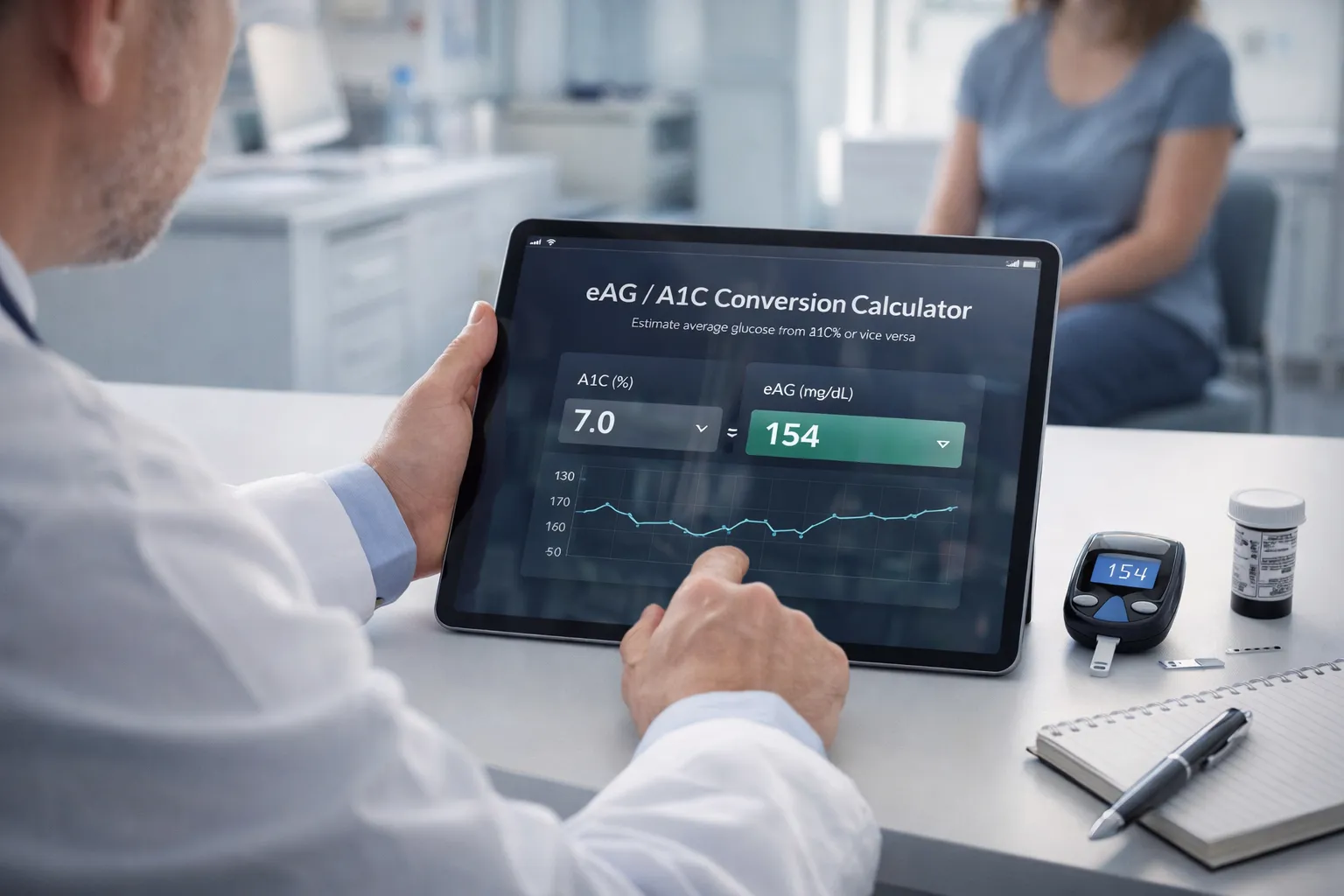
If your A1C is 7%:
👉 Your average blood sugar is about 154 mg/dL
Example A1C Conversion
Convert A1C to average blood sugar (eAG)
🧠 Why A1C Is So Important
A1C is one of the most trusted indicators in healthcare because it:
- Reflects long-term glucose control
- Helps diagnose diabetes and prediabetes
- Predicts risk of complications
Unlike daily readings, A1C shows the big picture.
📊 What Is a Normal A1C Level?
| Category | A1C Range |
|---|---|
| Normal | < 5.7% |
| Prediabetes | 5.7% – 6.4% |
| Diabetes | ≥ 6.5% |
🎯 Target for Most People with Diabetes
👉 Below 7% (individualized by doctor)
🧠 A1C vs Blood Sugar vs GMI (Key Differences)
| Metric | What It Measures | Best Use |
|---|---|---|
| A1C | 2–3 month average | Long-term control |
| Blood Sugar | Current level | Daily tracking |
| GMI | CGM-based estimate | Real-time trends |
🏠 How to Estimate A1C at Home
Step 1: Track glucose readings
Monitor your blood sugar levels regularly over several weeks.
Step 2: Calculate your average
Add up all readings and divide by the number of readings.
Step 3: Apply the formula
Example average = 128 mg/dL
A1C = (128 + 46.7) ÷ 28.7
👉 Estimated A1C ≈ 6.1%
⚠️ Important Note
Home estimates are helpful, but lab tests are more accurate.
📉 How to Lower Your A1C (Evidence-Based)
1. Improve Diet
- Reduce refined carbs
- Increase fiber intake
2. Exercise Regularly
Improves insulin sensitivity
3. Monitor Trends
Focus on patterns, not single readings
4. Follow Medical Advice
Medication adherence is critical
⚠️ Common Mistakes
❌ Only checking daily glucose
A1C provides the long-term picture that daily readings can't show.
❌ Ignoring long-term trends
Focus on overall patterns, not just individual readings.
❌ Misreading A1C ranges
Know the difference between normal, prediabetes, and diabetes ranges.
❌ Not testing regularly
Test every 3-6 months as recommended by your doctor.
❓ FAQs (Featured Snippet Optimized)
How is A1C calculated?
A1C measures the percentage of glucose attached to hemoglobin in your red blood cells over the past 2-3 months. The formula to convert A1C to average glucose is: eAG = 28.7 × A1C - 46.7. This gives you estimated average glucose (eAG) in mg/dL.
Can I calculate A1C from blood sugar?
Yes, you can estimate A1C from average blood sugar using the reverse formula: A1C = (eAG + 46.7) ÷ 28.7. However, this is an estimate. Lab tests are more accurate because they measure actual glycated hemoglobin.
How often should A1C be tested?
A1C should be tested every 3-6 months, depending on your condition and treatment plan. If you have diabetes and your blood sugar is well-controlled, testing every 6 months may be sufficient. If adjusting treatment or poorly controlled, test every 3 months.
What A1C level is dangerous?
An A1C above 9% indicates poor glucose control and significantly increases risk of complications. A1C above 10% is considered very dangerous and requires immediate medical attention. Normal is below 5.7%, prediabetes is 5.7-6.4%, and diabetes is 6.5% or higher.
What is a normal A1C level?
A normal A1C level is below 5.7%. Prediabetes range is 5.7-6.4%. Diabetes is diagnosed at 6.5% or higher. For people with diabetes, the target is typically below 7%, but this can be individualized based on age, health conditions, and risk factors.
What is the difference between A1C and blood sugar?
Blood sugar (glucose) measures your current level at a single moment, while A1C reflects your average blood sugar over the past 2-3 months. A1C shows long-term glucose control, while daily blood sugar readings show immediate levels and help track daily patterns.
Can A1C be too low?
Yes, an A1C below 5% may indicate frequent hypoglycemia (low blood sugar), which can be dangerous. Very low A1C can result from over-medication, excessive exercise, or inadequate food intake. Always discuss your target A1C with your healthcare provider.
How can I lower my A1C?
Lower A1C by: (1) Reducing refined carbs and increasing fiber, (2) Exercising regularly to improve insulin sensitivity, (3) Taking medications as prescribed, (4) Monitoring blood sugar trends, (5) Managing stress, (6) Getting adequate sleep. Consult your doctor for personalized advice.
What is eAG in diabetes?
eAG (estimated Average Glucose) is your A1C converted to average blood sugar in mg/dL or mmol/L. It helps you understand what your A1C means in terms of daily glucose readings. eAG makes A1C results more relatable to your daily blood sugar monitoring.