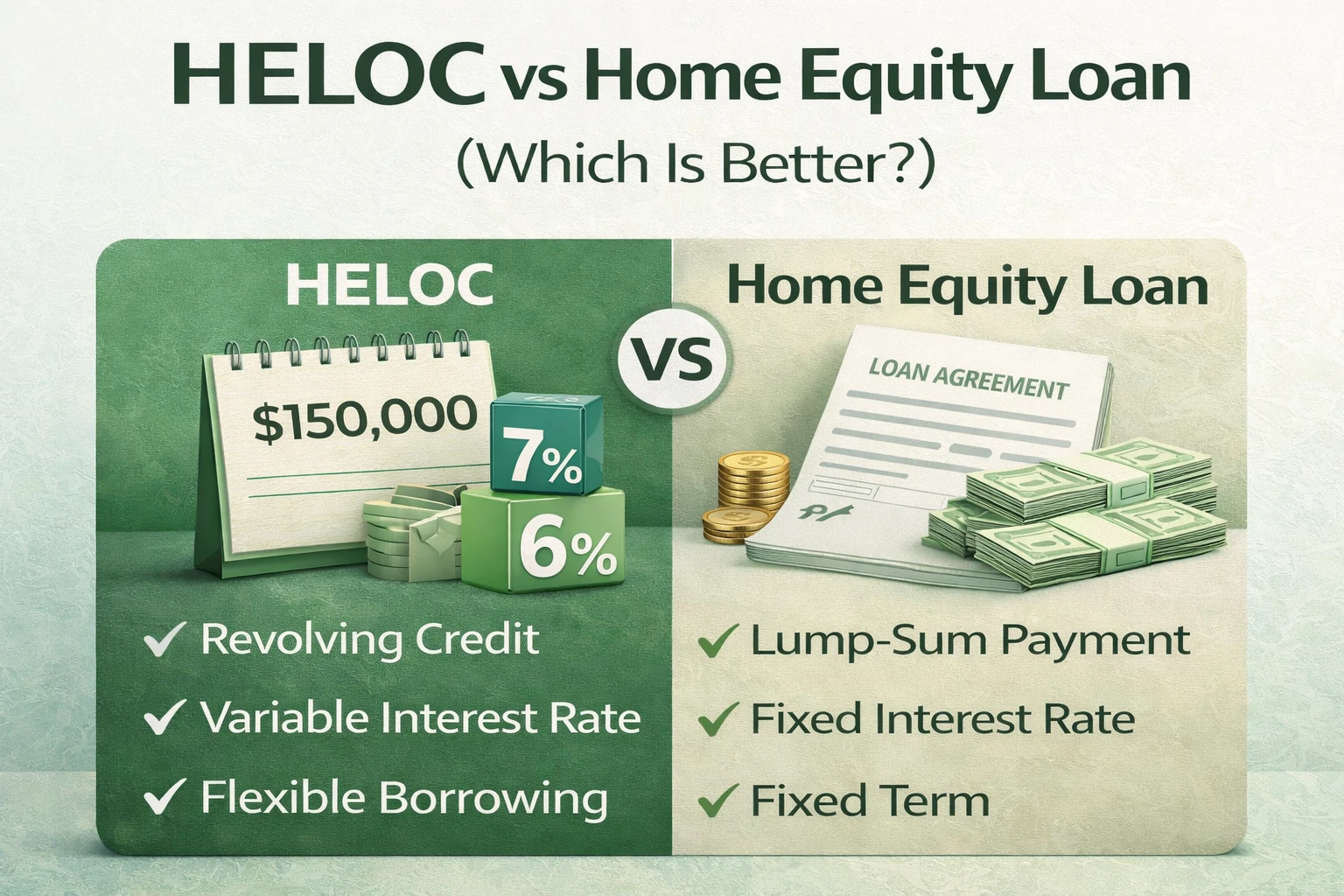
📊 Key Differences
| Feature | HELOC | Home Equity Loan |
|---|---|---|
| Type | Credit line | Lump sum |
| Rate | Variable | Fixed |
| Flexibility | High | Low |
| Payment | Variable | Predictable |
| Best For | Ongoing expenses | One-time expense |
🏠 When to Choose HELOC
- • Ongoing expenses – Home renovations done in phases
- • Renovation projects – Draw funds as needed during construction
- • Flexible borrowing – Emergency fund or multiple expenses
- • Lower initial payments – Interest-only during draw period
🏠 When to Choose Home Equity Loan
- • One-time expense – Debt consolidation or single purchase
- • Fixed payment preference – Want predictable monthly costs
- • Lower risk tolerance – Avoid variable rate uncertainty
- • Budget planning – Need consistent payment amounts
⚠️ Risks
HELOC Risks
- • Rate increases can double payments
- • Temptation to overborrow
- • Payment shock during repayment phase
Home Equity Loan Risks
- • Less flexibility if needs change
- • May pay interest on unused funds
- • Refinancing costs if you need more
❓ Frequently Asked Questions
Which is cheaper?
It depends on interest rates and how you use the funds. HELOCs often start cheaper but can become more expensive if rates rise.
Can I have both?
Yes, you can have both a HELOC and a home equity loan simultaneously, as long as your combined LTV stays within lender limits (typically 80-90%).
Which is easier to qualify for?
Requirements are similar for both. HELOCs may have slightly stricter credit requirements due to the variable rate risk.
Can I convert a HELOC to a home equity loan?
Some lenders allow you to convert all or part of your HELOC balance to a fixed-rate loan, giving you payment stability.