📏 Step-by-Step Calculation
Step 1: Measure Area (in feet)
Multiply length by width to get square footage
Example: 10 ft × 10 ft = 100 square feet
Step 2: Convert Thickness to Feet
Divide inches by 12 to convert to feet:
- • 4 inches = 0.33 ft
- • 5 inches = 0.42 ft
- • 6 inches = 0.5 ft
Step 3: Multiply and Divide by 27
Calculate cubic feet, then convert to cubic yards
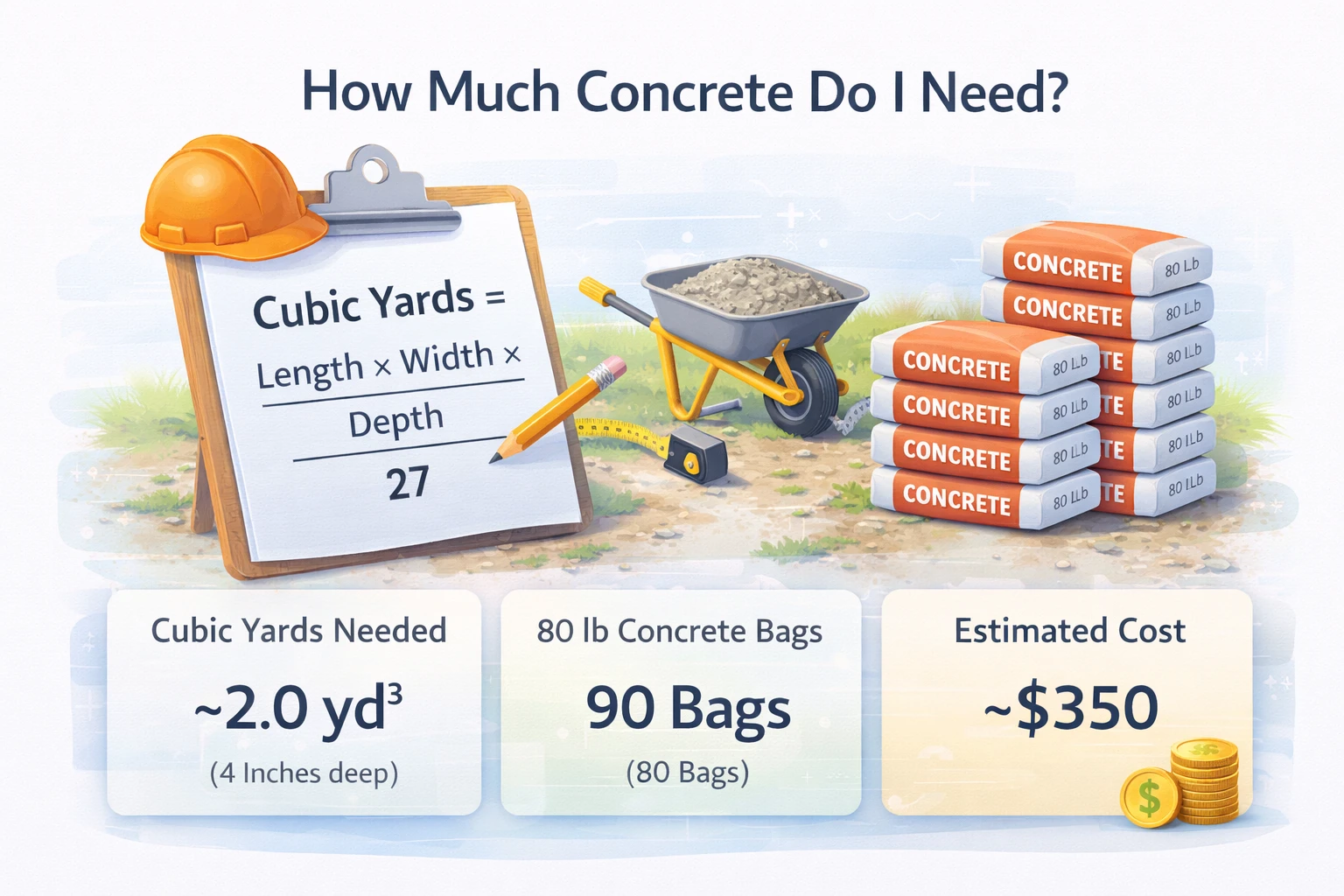
Length × Width × Thickness (ft) ÷ 27 = Cubic Yards
🧱 Example Calculation
Slab Dimensions:
- • Length: 10 feet
- • Width: 10 feet
- • Thickness: 4 inches (0.33 feet)
Calculation:
10 × 10 × 0.33 ÷ 27 = 1.23 cubic yards
Always add 5–10% extra for waste
📊 Common Concrete Amounts
| Area | Thickness | Cubic Yards |
|---|---|---|
| 10×10 | 4" | 1.23 |
| 12×12 | 4" | 1.78 |
| 15×15 | 4" | 2.78 |
| 20×20 | 4" | 4.94 |
| 20×30 | 6" | 11.11 |
🧰 Types of Projects
Slabs & Patios
Typical thickness: 4 inches
Use for walkways, patios, and light-duty areas
Driveways
Typical thickness: 5–6 inches
Thicker for heavy vehicles and RVs
Footings
Varies by building code
Check local requirements for depth and width
Sidewalks
Typical thickness: 4 inches
Standard for pedestrian traffic
⚠️ Mistakes to Avoid
Forgetting Thickness Conversion
Always convert inches to feet by dividing by 12. Using inches in the formula will give you incorrect results.
Not Adding Extra Material
Always order 5–10% more concrete than calculated to account for waste, spillage, and uneven ground.
Ignoring Uneven Surfaces
Low spots in your base will require more concrete. Inspect and level the ground before calculating.
Using Wrong Units
Make sure all measurements are in the same unit (feet) before calculating. Mixing feet and inches will cause errors.
💡 Pro Tip
Always order:
5–10% extra concrete
Running short mid-pour is expensive and can compromise your project. Extra concrete is always better than not enough.
❓ Frequently Asked Questions
How many cubic feet in a yard?
27 cubic feet = 1 cubic yard. This is why we divide by 27 in the concrete calculation formula.
Can I mix concrete myself?
Yes, for small projects only. Mixing bags is labor-intensive and more expensive for projects requiring more than 1 cubic yard. Ready-mix delivery is recommended for larger jobs.
How do I calculate concrete for irregular shapes?
Break the area into rectangles or triangles, calculate each section separately, then add them together. For circles, use πr² × thickness ÷ 27.
What if I order too much concrete?
You can use extra concrete for small projects like stepping stones, garden borders, or fill low spots. Concrete cannot be returned once mixed.
How thick should my concrete be?
4 inches for patios and walkways, 5–6 inches for driveways, and 6+ inches for heavy vehicle traffic. Always check local building codes.